
A system that replaces what the floor does
Layer by layer, what each part of a SoftStall installation is for, and the limitations worth understanding before you buy.
A mat sits on a floor. A system replaces what the floor was doing badly. The distinction matters because cushioning on its own does not solve moisture, and sealing on its own does not solve comfort.
The layers, from the subfloor up
The existing base, inspected, levelled where required, and cleaned. The system performs as well as the base underneath it allows.
The supportive core that reduces concussion on legs and joints during the many hours a horse spends standing.
A non-absorptive surface layer that resists moisture, takes daily traffic, and gives waste nowhere to soak into.
The cover is sealed and turned up at every wall and doorway, so there is no seam at floor level for liquid to travel through.
The system in cutaway
Select a marker to read what that layer does.
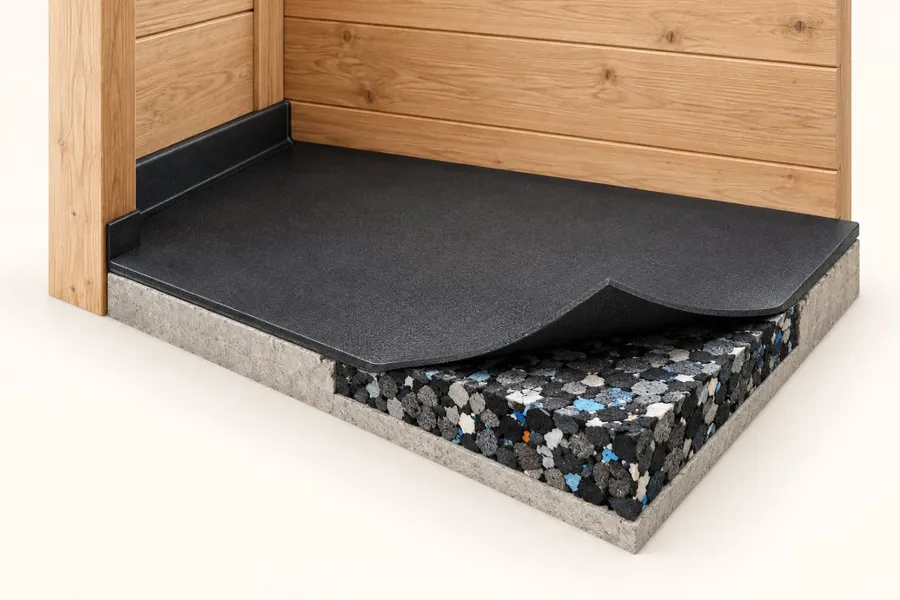
The non-absorptive surface layer, shown peeled back at one corner. It is sealed at every edge so urine and washwater stay on top of the floor rather than soaking through it.
The cushioned core, visible in section at the front edge. This is the layer that absorbs concussion while a horse stands, and it is what makes the floor feel different underfoot.
The upstand against the stall wall. It closes the joint where the floor meets the wall, which is the point conventional floors fail first.
The base the system sits on, shown as the grey slab edge. Level, sound, and drained to specification — the base does more for the finished result than any other single factor.
Why sealing matters as much as cushioning
Moisture is what destroys stall floors and what drives bedding consumption. If the surface is cushioned but seamed, urine finds the seams and reaches the subfloor, and you are back to digging out soaked bedding. Sealing the perimeter is what converts a comfortable floor into a floor that also stays clean.
What that means for bedding and labour
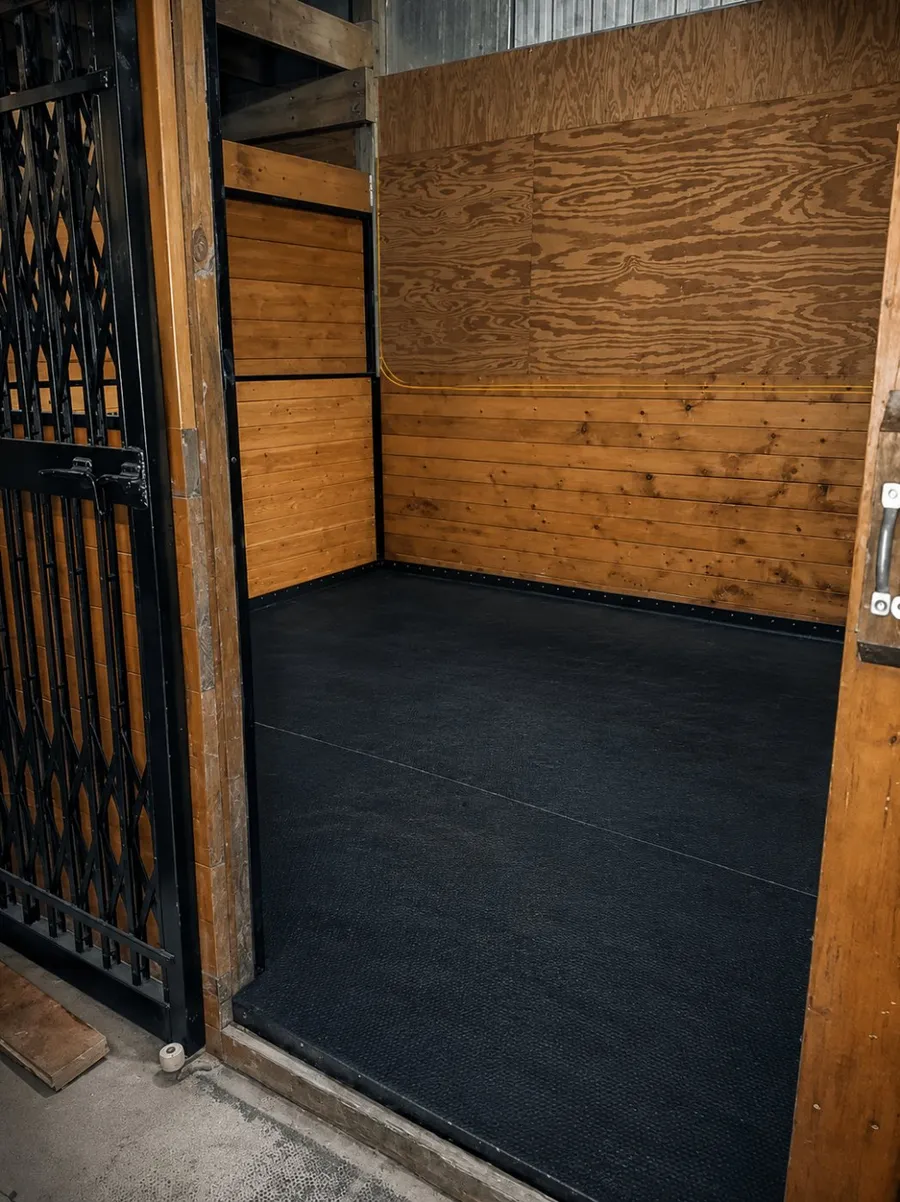
On a sealed, non-absorptive surface, bedding is no longer doing moisture management — it is doing comfort and appearance. That is why most SoftStall barns use a thin layer rather than a bank, and why mucking out becomes a lifting job rather than a digging job.
Waste stays on the surface where it can be lifted off
Less bedding bought, stored, hauled, and disposed of
Shorter daily cleaning time per stall
Less weight moved by whoever does the mucking out
Limitations worth knowing
This is not a floor you install over a failing base and expect to fix the base. It is also not a DIY product where sealing is involved, and it does not eliminate bedding entirely. Being clear about those three things up front avoids disappointment later.
A poor or badly drained subfloor must be dealt with first
Sealed systems require professional installation
Bedding is reduced, not eliminated
Every installation is cut to the space, so measurements matter
How the other products relate
SoftStep applies the same thinking to traffic areas, where traction and sweepability matter more than deep cushioning. SoftWall moves protection from the floor to the walls. SoftRide takes the sealed wall-to-wall principle into a trailer, where vibration replaces standing time as the problem.
Questions about the system
No. A mat is a single layer laid on a floor. This is a cushioned layer plus a non-absorptive cover sealed continuously to the stall perimeter.
That combination exists in the market as interlocking mats, and it is what most owners are replacing when they come to us.
Usually, after levelling and compaction. The subfloor review at quote stage determines what preparation is needed.
Related documentation
Want this in your barn?
Send stall dimensions and we will come back with pricing for the stalls you want done.