
What actually happens on installation day
Who arrives, how long it takes, what we need from you, and how work is phased so your horses always have somewhere to stand.
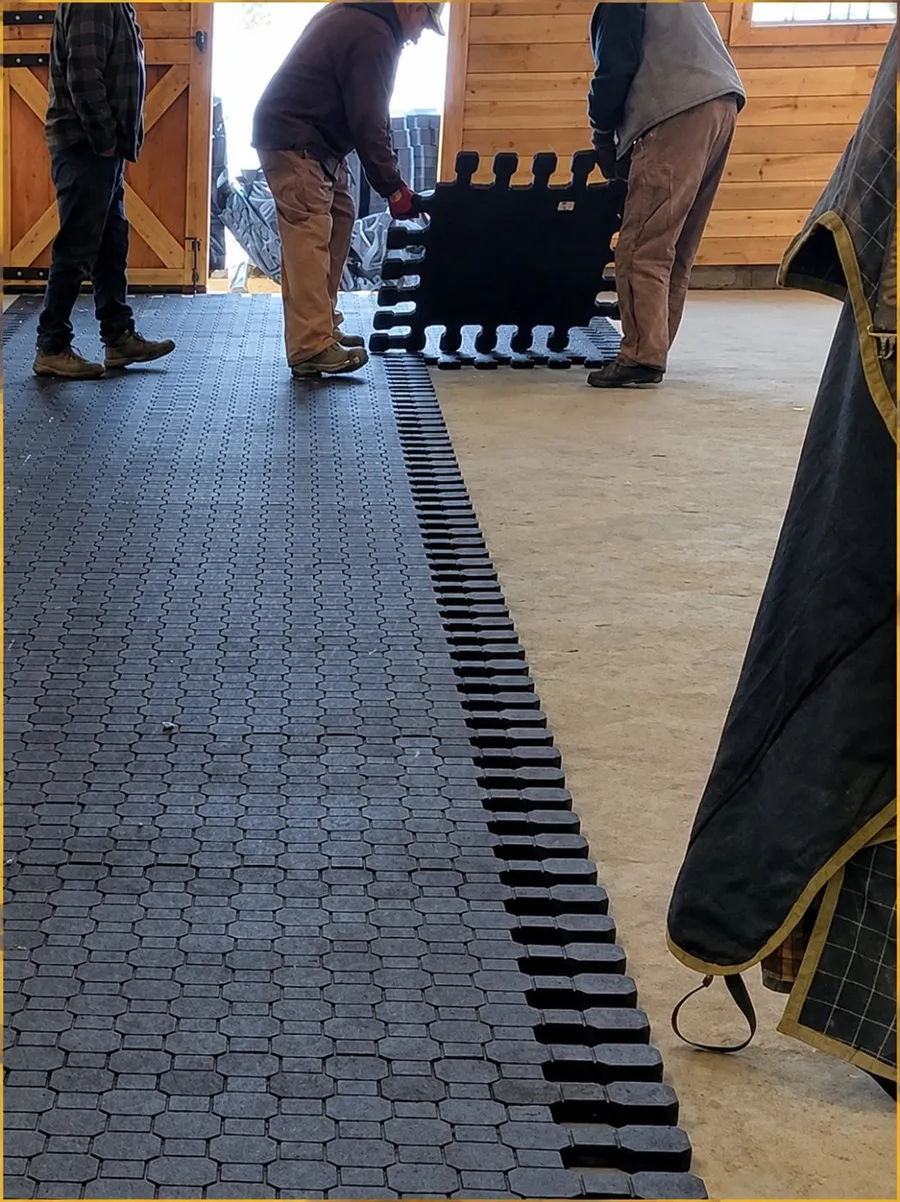
SoftStall and SoftRide are sealed systems, so installation is carried out by trained crews rather than shipped as a kit. SoftStep pavers are different — many aisle and pathway projects are installed in-house once the base is prepared correctly.
A single stall, start to finish
The stall is emptied and the existing floor or matting removed. Bedding, feeders, and waterers need to be out of the way before the crew arrives.
The base is inspected, levelled where needed, and cleaned. This is the stage most likely to add time if the floor turns out to be worse than expected.
The cushioned underpad is laid, then the top cover is fitted and sealed continuously at every wall and doorway.
Edges and transitions are finished, the stall is cleaned down, and we walk it with you before it goes back into use.
How long it takes
A typical single stall is completed in about a day. Multi-stall work is scheduled in phases, usually a small group of stalls at a time, so a barn is never fully out of service. Aisle and wash bay work is quoted by area and normally runs alongside stall work rather than after it.
Single stall: approximately one day
Multi-stall barns: phased in groups
Facility projects: sequenced across weeks or seasons
Trailers: assessed, prepared, fitted, and sealed in one visit where possible
What we need from you
Access and an empty space are the two things that hold jobs up. If the crew can park close, get power if required, and find the stall cleared, the day runs to plan.
Stalls cleared of bedding, feeders, and loose fittings
Vehicle access to the barn and somewhere to unload
Somewhere for horses to go during the work
Someone on site who can answer questions about the barn
What you can install yourself
SoftStep interlocks rather than bonds, so once the base is prepared to specification many owners lay it themselves. Sealed systems — SoftStall and SoftRide — are not DIY, because the continuous seal is what makes them work and it is not something that can be reliably achieved without training.
After installation
The stall can normally go back into use the same day it is finished. We hand over maintenance guidance at that point, and the first bedding load is usually the moment owners realise how much less they need.
Installation questions
Yes. Removal and disposal of existing matting or flooring is part of the installation scope and confirmed at quote stage.
Normal barn operation continues around the work. The stall being installed needs to be empty and accessible.
We flag it before proceeding and confirm any additional preparation with you rather than absorbing it silently into the schedule.
International installations are handled case by case, often with local partners. Talk to us about your location.
Documents for this stage
Ready to get on the schedule?
Send us your measurements and we will come back with pricing and the next available window.