
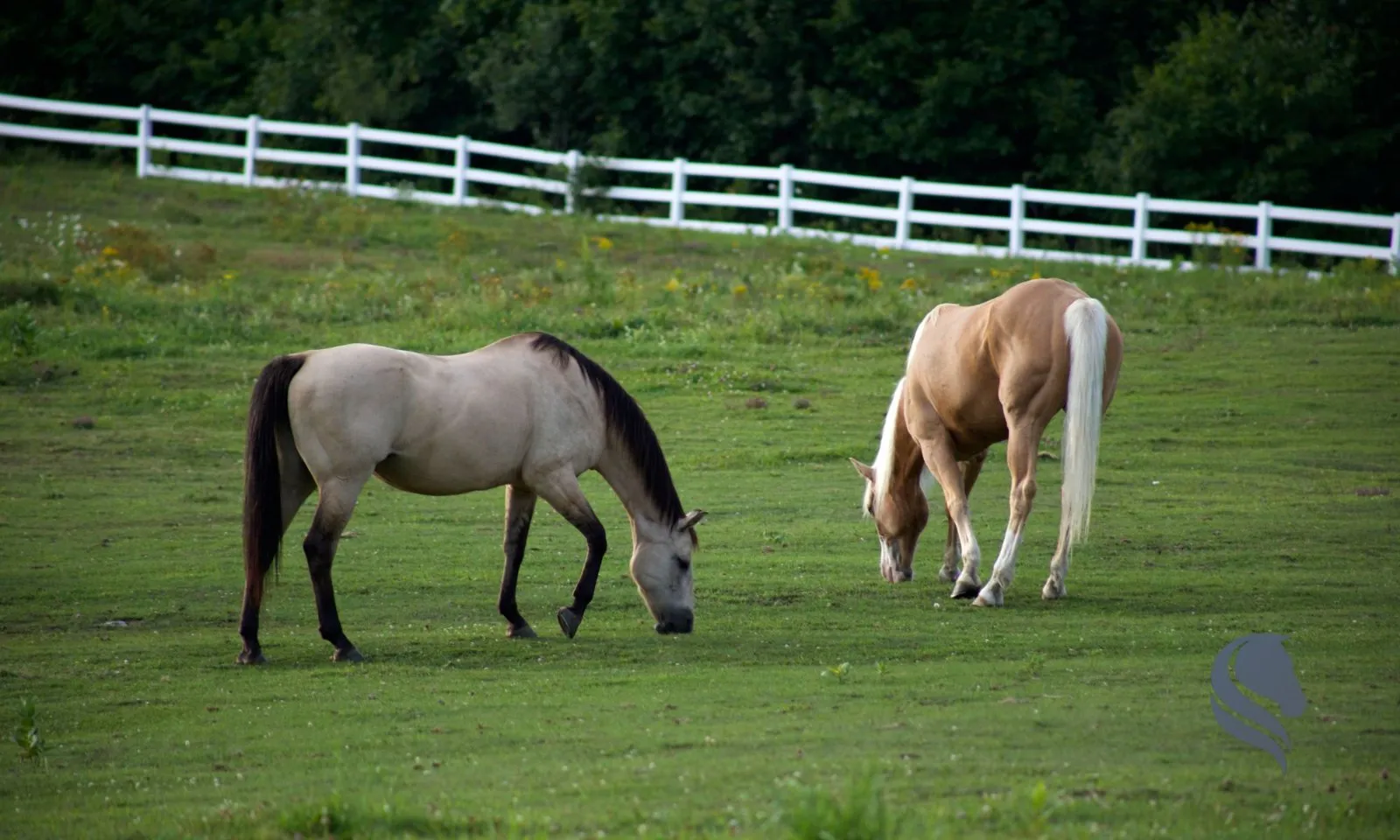
The wettest, busiest ground in the barn
Aisles, wash bays, and the routes between buildings take more traffic than any stall and spend more of the year wet. They are also where most slips happen.
Why aisles come up first
Post-work hosing, ice boots, winter melt, and rain tracked in on hooves all leave a smooth floor at its most dangerous.
Loose surfacing shifts under traffic, washes out in rain, and ends up raked back into place every week.
Cross-tying, grooming, shoeing, and clipping all happen on the aisle floor — for the horse and for whoever is working on it.
Paths between barn, arena, and paddocks churn up in wet weather and freeze uneven in winter.
Surfacing for traffic areas
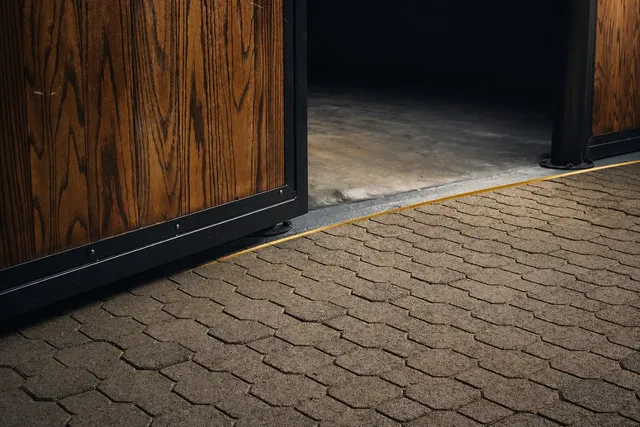
SoftStep
Interlocking rubber pavers with wet traction, cushioning underfoot, and a surface that sweeps and hoses clean. UV stabilised for outdoor runs.
View SoftStep →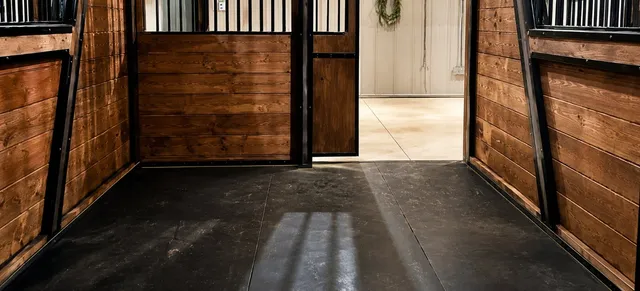
SoftStall
Most barns that resurface an aisle end up doing the stalls too, so the horse is not moving between very different surfaces.
View SoftStall →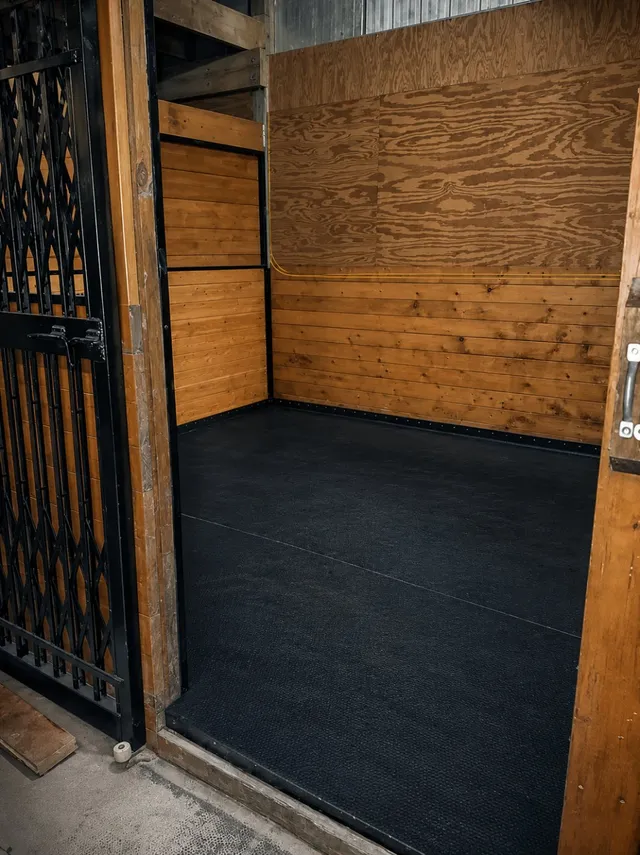
SoftWall
Padding for wash and tack stalls where horses fidget, lean, or kick out while tied.
View SoftWall →Grip that does not depend on the floor being dry
Concrete is at its most dangerous exactly when you need it least — after hosing, in winter, with a horse on the end of a lead rope. SoftStep is specified for wet traction first, which is why it ends up in wash bays and outdoor routes rather than just aisles.
Traction that holds through hosing and winter melt
Nothing loose to rake back into place
Sweeps and hoses clean instead of needing to be dug out
The stalls are so much easier to clean and the horses love coming into their new digs. My barn is so much cleaner in general because of no dirt.
From base check to finished run
Length, width, and where the run transitions to other surfaces.
Level, drainage, and slope reviewed — the base does most of the work.
Interlocked across the run, cut around drains, posts, and doorways.
Transitions treated at doorways and where the run meets concrete or grass.
Questions about aisles and wash bays
Often yes. Because the pavers interlock rather than bond, many aisle and pathway projects are laid in-house once the base is prepared to specification.
Foot traffic and barn equipment are typical. Confirm vehicle and equipment loading against the specification for your intended use.
Pavers are cut around drains and the surface is laid to keep water moving toward them.
Yes, which is why the same product is used for temporary event surfaces. Pavers can be removed and reinstalled.
Tell us about your aisle or wash bay
A specialist will follow up with pricing by area.